
Metrifield Dynamics
Find the defect from the air. Diagnose it on the panel.
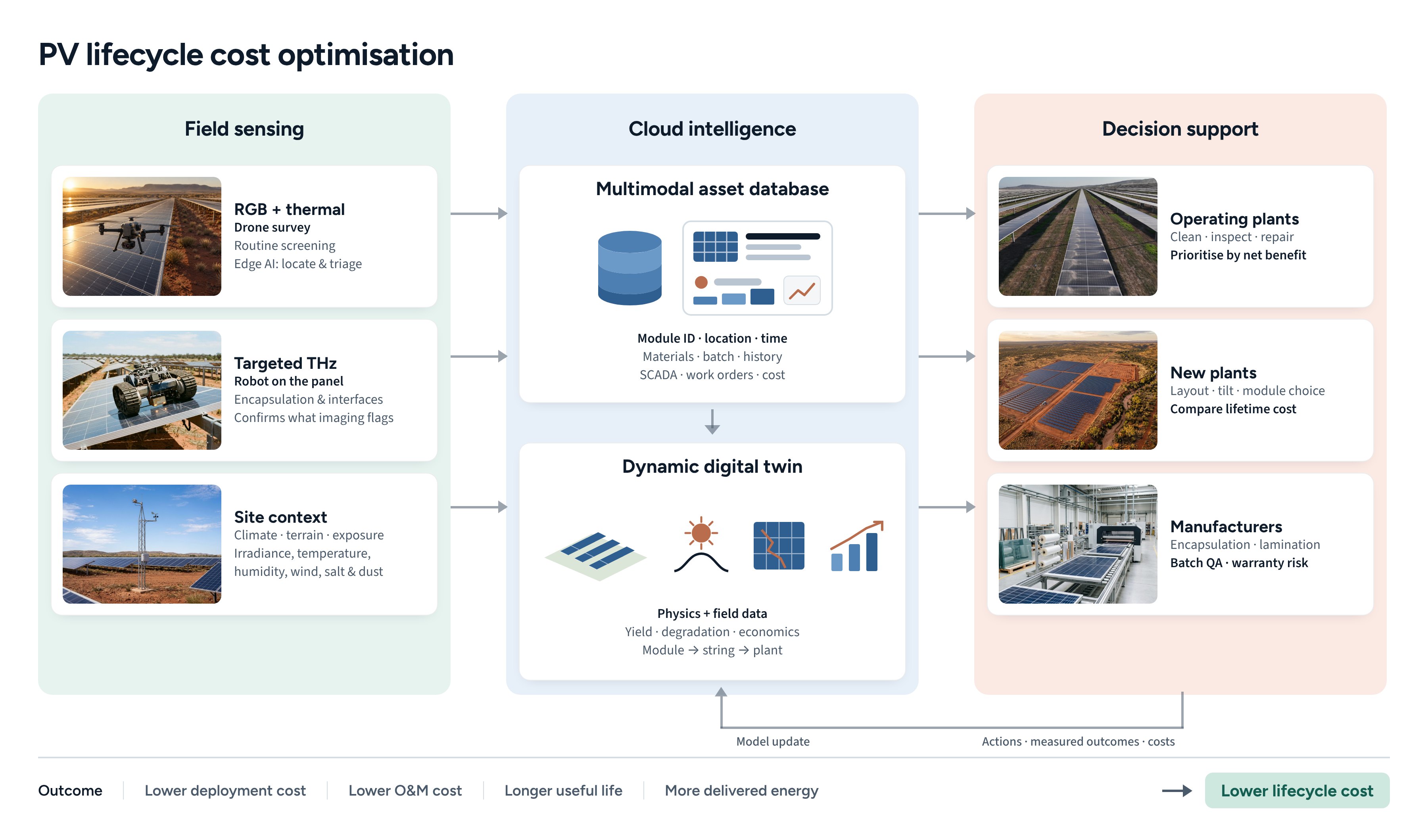
Drones screen the array with RGB and thermal imaging. A robot then goes onto the flagged modules with a terahertz scanner to see what is happening inside the glass. Metrifield links every result to the module's materials, exposure and energy performance, so each repair, replacement and design decision is made on lifecycle cost.
A climate and condition database
Every module recorded with its materials and batch, linked to where it sits: climate zone, terrain, coast, dust and fire exposure, plus every inspection and its energy performance. Over time, a map of how solar ages across Australia.
Drone finds it, robot confirms it
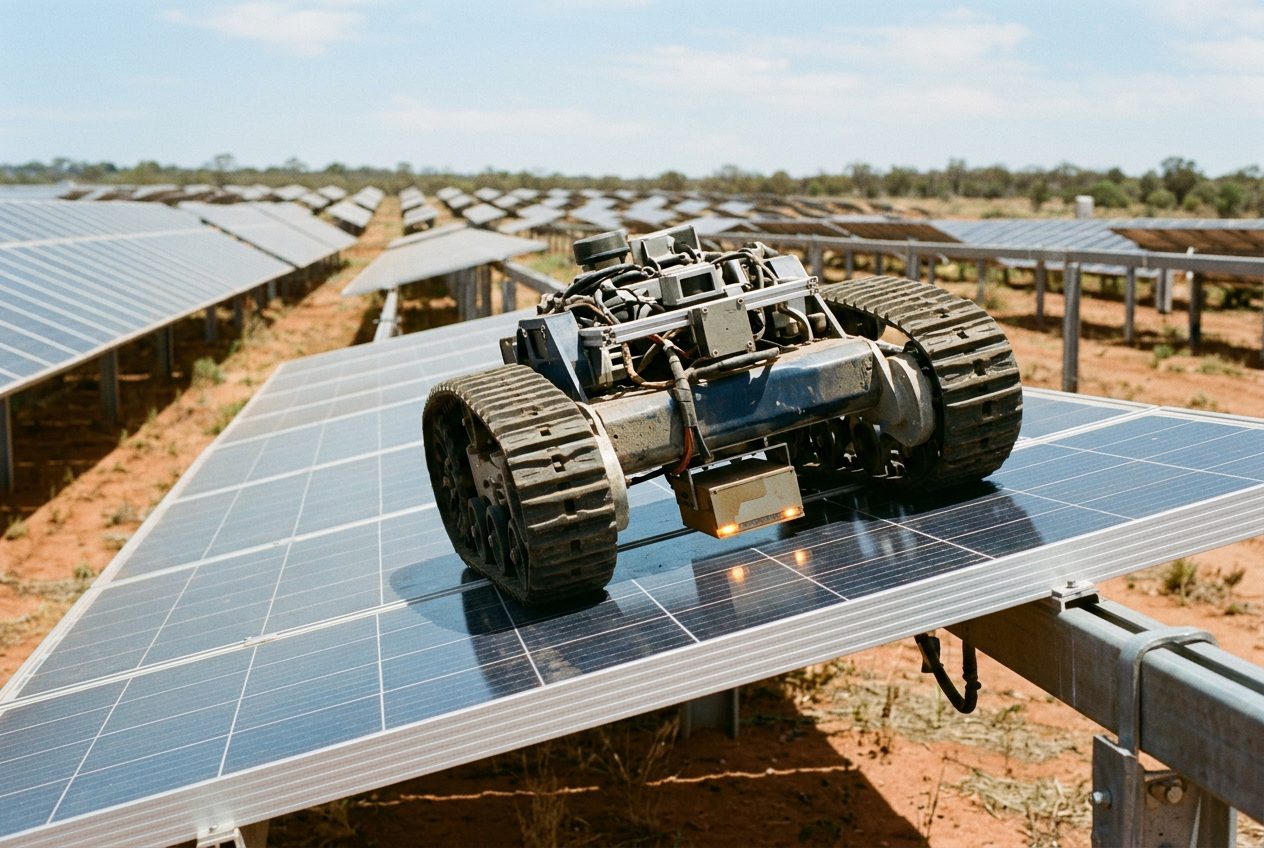
Drone RGB and thermal screening flags suspect modules. A panel-crawling robot then scans them with terahertz to confirm what is happening inside the encapsulation.
Every action ranked by net benefit
Clean, repair, replace or defer: the digital twin predicts recoverable energy, failure risk and cost for each option before a work order is raised, then learns from the outcome.
How it works
From field observation to a decision with the cost comparison attached
Drone screening
Drones fly scheduled and event-triggered RGB and thermal surveys over the array. Edge AI checks image quality, locates each module and grades anomalies on site. Terrain, shading, climate and on-site exposure data separate regional conditions from microclimates inside the array.
Robot terahertz diagnosis
A robot moves onto the flagged modules, and onto representative healthy ones, and scans them at close range with terahertz. This gives evidence of material layers and interface condition inside the encapsulation that surface imagery and thermal cannot show.
Cloud intelligence
Inspections, healthy controls, SCADA and electrical data, work orders and actual expenditure are linked through module IDs, locations, timestamps and manufacturing batches, then coupled with yield, thermal, degradation and cost models to form module, string and plant digital twins.
Decision support and feedback
Cleaning, reinspection, repair and replacement are prioritised by recoverable energy, expected loss and intervention cost. Each action's cost, condition change and generation response feeds back into the models.
Why it matters
Modules from the same factory can look identical on day one and age very differently in the field. The difference is traceable, if the data is connected.
Who we work with
Three decision-makers, one condition and degradation database
Asset owners & O&M
Operating plants
Schedule cleaning, repairs and replacements on what they recover, and stop paying for low-value work.
Learn moreDevelopers & EPCs
Planned plants
Rank layout, tilt, row spacing, mounting height and module choice by whole-of-life cost, not just first-year yield.
Learn moreModule manufacturers
Factory feedback
Trace field failure modes back to bills of materials, supplier batches and lamination windows before warranty costs arrive.
Learn moreOutcomes
Lower lifecycle cost. More delivered energy. Longer useful life.
Fewer site visits
Tiered screening and on-demand terahertz inspection cut repeat visits and specialist labour.
Less wasted work
Work orders prioritised by economic value reduce low-value cleaning, unnecessary replacements and fault-related downtime.
Fewer surprises
Connected records from factory release to operation remove duplicate data collection and make defect responsibility clear.
About Metrifield
Founded in Sydney by engineers who have built field sensing and edge AI for infrastructure
Metrifield Dynamics was founded by Harrison, Sohan Domingo and Lauren to bring materials-level diagnostics and lifecycle economics together for solar. Meet the team.
Running, building or manufacturing for solar in Australia?
We are looking for asset owners, O&M providers, developers and module manufacturers to work with as early sites and data partners.